Environmental Defense: Why Ceramic Coating is Non-Negotiable
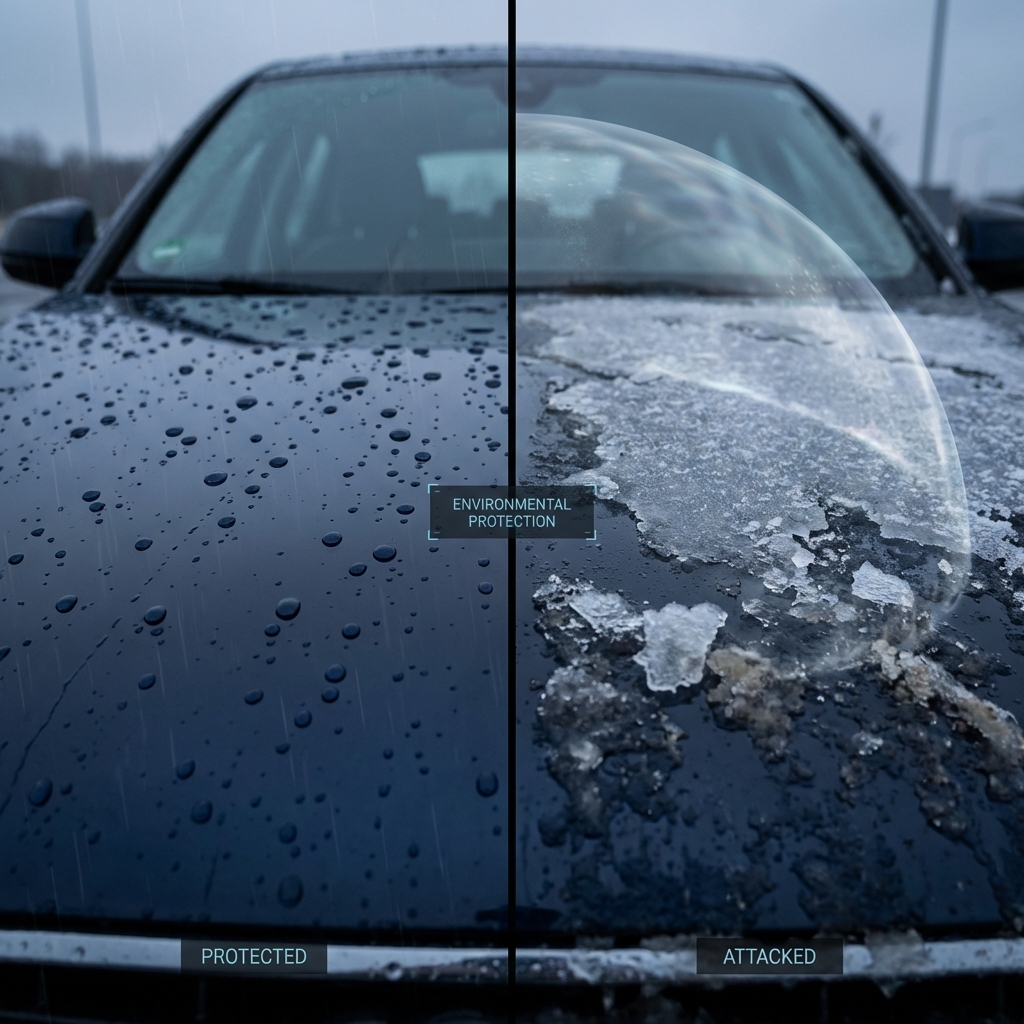
The Science of Ceramic Protection: Beyond Aesthetics
The automotive protection landscape has fundamentally shifted. What was once considered a luxury upgrade for car enthusiasts has evolved into an essential asset preservation strategy for vehicle owners across North America and Australia. In 2026, ceramic coating isn't about vanity—it's about defending your investment against increasingly harsh environmental conditions that vary dramatically by region.
Climate change, infrastructure development, and evolving environmental regulations have created unique automotive challenges in each market. From devastating droughts in the American Southwest to brutal winter road treatments in Canadian cities, and from extreme UV exposure in Australia to water restrictions affecting traditional car care—the environmental stressors facing modern vehicles demand more sophisticated protection than traditional waxes and sealants can provide.
Understanding how ceramic coating functions as environmental armor in region-specific contexts is essential for vehicle owners who want to preserve their automotive investments while adapting to the environmental realities of their location.
Beyond Aesthetics
Before examining region-specific applications, it's important to understand what ceramic coating actually does at a molecular level. Unlike traditional waxes that sit on top of paint and degrade within weeks, ceramic coatings create a semi-permanent bond with your vehicle's clear coat through a process called cross-linking.
The primary ingredient in quality ceramic coatings is silicon dioxide, often enhanced with titanium dioxide and other chemical compounds. When properly applied, these molecules form covalent bonds with the paint surface, creating a protective layer that is significantly harder, more hydrophobic, and more chemically resistant than the original clear coat.
This hydrophobic property—the ability to repel water—is measured by contact angle. Quality ceramic coatings achieve contact angles exceeding 110 degrees, meaning water beads into tight spheres and rolls off the surface rather than spreading and sitting on the paint. This seemingly simple characteristic has profound implications for environmental protection.
The coating's chemical resistance provides defense against acidic contaminants including acid rain, industrial fallout, bird droppings, tree sap, and road chemicals. Its UV resistance prevents oxidation and fading from prolonged sun exposure.
USA Market: Water Conservation Meets Vehicle Protection
The American automotive market is experiencing a fundamental shift in how vehicle maintenance intersects with environmental responsibility. Drought conditions across the Southwest, water restrictions in California, and growing environmental consciousness among consumers have made water conservation a critical consideration in vehicle care.
The Water Reclamation Revolution
Traditional car washing is extraordinarily water-intensive. A standard home car wash can consume 80-140 gallons of water per wash, while even efficient commercial car washes use 15-40 gallons per vehicle.
Ceramic coating dramatically reduces water consumption through multiple mechanisms. The hydrophobic surface means dirt and contaminants don't bond to the paint—they sit on top of the coating and rinse away with minimal water pressure. Many ceramic-coated vehicles can be effectively cleaned with just 2-3 gallons of water using a spray bottle and microfiber cloth method, representing a 95% reduction compared to traditional washing.
For auto spas marketing ceramic coating in water-stressed American regions, quantifying this water reduction is compelling. A vehicle washed weekly with traditional methods consumes approximately 4,160-7,280 gallons annually. The same vehicle with ceramic coating, washed monthly using waterless methods, uses roughly 24-36 gallons annually.
"Your ceramic coating prevents the equivalent water consumption of 175 eight-minute showers annually."
Regional Environmental Stressors in the USA
- Southwest Desert Regions: Extreme UV exposure and dust storms. Ceramic coating's UV protection prevents rapid paint fading.
- Coastal Areas: Salt air corrosion and humidity. Ceramic coating creates a barrier preventing salt from bonding to paint.
- Industrial Regions: Acid rain and chemical fallout. The coating prevents acidic contaminants from etching paint.
- Northern States: Road salt exposure and freeze-thaw cycles. Mitigation of salt damage.
Canada Market: Conquering Winter's Chemical Assault
The Canadian automotive environment is among the most punishing globally. The combination of extreme temperature fluctuations, aggressive road de-icing chemicals, and prolonged winter exposure creates a perfect storm of vehicle degradation.
Understanding Magnesium Chloride Salt Damage
Canadian municipalities have increasingly shifted to magnesium chloride-based de-icing solutions. While effective at low temperatures, it is significantly more aggressive toward vehicle paint and metal. It is hygroscopic, remaining wet and corrosive long after roads dry.
Ceramic coating provides critical defense through chemical resistance. The coating's molecular structure prevents magnesium chloride from bonding with paint surfaces. When the vehicle is washed, the chemical slurry rinses away cleanly.
The "Invisible" Winter Research Phase
Canadian vehicle owners display a distinctive search behavior pattern: the winter research phase. From January through March, searches for "rust prevention" and "ceramic coating" spike. This creates a critical marketing window.
Australia Market: UV Defense and Water Scarcity
The Australian automotive environment presents a unique combination of extreme UV exposure, water scarcity, and harsh climate conditions. Australian vehicle owners face some of the highest rates of paint degradation globally.
Extreme UV Exposure and Paint Oxidation
Australia experiences some of the highest UV radiation levels globally. Unprotected vehicle paint shows visible fading within 2-3 years. Ceramic coating provides critical UV defense, absorbing and deflecting harmful radiation.
Water Saving Rating
Water restrictions are a recurring reality. Ceramic coating aligns perfectly with Australian water conservation values. A "Water Saving Rating Five Star" concept can highlight how ceramic coating enables effective vehicle cleaning with minimal water consumption.
The Economic Case for Environmental Protection
While environmental benefits are compelling, economic factors drive purchase decisions. Ceramic coating is an investment that delivers financial returns:
- Reduced Maintenance Costs: Elimination of regular waxing and less frequent washing saves hundreds annually.
- Resale Value Preservation: Vehicles with documented protection command higher resale values.
- Avoided Repair Costs: Prevention of salt corrosion and clear coat failure avoids expensive repairs.
Protect your customer's investment. Learn how to position ceramic coating as essential protection. Contact Us.
Ready to apply this to your brand?
We partner with brands looking to scale profitably.
Apply for a strategy call